

Screw Pump
Why Choose Us
Our History
The company founded in 2009
Our Certificate
SGS Audited Supplier
Product Application
Industry Agriculture, Petrochemicals, fire system, Electricity, municipal, etc...
Production Market
Southeast Asia, Middle East, Russia, South America, Africa
A screw pump, also known as a water screw, is a positive displacement (PD) pump that uses one or more screws to move fluid solids or liquids along the screw axis. In its simplest form, a single screw rotates in a cylindrical cavity, moving the material along the screw’s spindle.
-
 PCP Down Hole PumpThe PC pump is also named progressive cavity pump, it consists of a stator and a rotor, the helical interference of the both parts forms a series of continuous sealed cavities, and the mediumAdd to Inquiry
 -
 Multiphase Transfer Progressive Cavity PumpProgressive cavity pump, as a type of positive displacement pump,works based on the interference fit between the stationary stator and the eccentric rotating rotor. This interference movement formsAdd to Inquiry
- Tel: +8613953308355
 Whatsapp: +8613953308355
 Wechat: +8613953308355
- Email: boshanpumpzp@163.com
- Add: Room 817, Building 5, No.111 Liuquan Road, High-Tech Zone, Zibo, Shandong, China
Screw pump operates with two counter-rotating screw rotors that are carefully designed to rotate “toward each other”. This traps the gas in the space between the rotor “screws”. As the screws rotate, this trapped volume is reduced, which not only compresses the gas, but also moves it toward the exhaust port.
When the progressive cavity pump begins to operate, power is supplied to the drive screw via an electric motor. The drive shaft is connected to the screwdriver that drives the screwdriver.
When the drive screw starts to rotate, the driven screws also rotate, as these screws engage each other. Due to the movement of these screws, a minimum vacuum starts to be generated in the inlet section. Due to this vacuum, fluid is drawn into the pump through the inlet valve.
As the fluid enters the pump, it becomes trapped between the gaps in the “screws”. This trapped fluid also moves with the rotation of the screw. As the screw moves, the volume of the trapped fluid decreases and the pressure of the fluid increases.
As the pressure of the fluid increases according to the desired pressure, it is discharged from the outlet valve and moved to the desired location.
When a screw pump pumps oil or other types of viscous fluids, the screw surfaces are lubricated as the fluid is pumped, so there is little or no clearance between the screws.
However, when pumping gas/water mixtures, water, or other types of light liquids, these components cannot come into contact with each other. If there is no contact, the parts will wear out quickly. Therefore, do not use a triple screw pump (where one screw drives the other two without gears) for water supply or multi-phase operation.
Applications for Screw Pumps
There are many uses for screw pumps in a variety of different industries, including Manufacturing, Mining, and Oil & Gas. Most of these applications deal with high viscosity fluid, such as oil or asphalt, or multi-phase fluid, which means there is liquid and vapor mixed together in the fluid stream.
Hydraulic and Lubrication Systems
Many lubrication systems and hydraulic systems use a screw pump. These are usually small, triple screw pumps. Lubrication and hydraulic systems like this are used for supplying lube oil to large machinery, supplying hydraulic power to high-pressure hydraulic systems or operating elevators in buildings.
Heavy Oil Pipeline
When pumping high viscosity crude oil, screw pumps can offer an ideal solution for moving it through pipelines. Able to pump higher viscosities than a centrifugal pump, and able to pump higher flows than a reciprocating pump, screw pumps are often used in these applications. In these scenarios, very large pumps are sometimes used to get to the flow rate required. These pumps are usually driven by large electric motors or diesel engines.
Multi-phase Pumping
Multi-phase pumping refers to pumping a mixture of fluid and vapor together, and is known to be one of the most challenging pumping applications. Serious damage can occur to compressors when liquid enters, just like serious damage can occur to most pumps when air enters. When built correctly, a screw pump can be a hybrid between a pump and a screw compressor, being able to handle both liquid and gas.
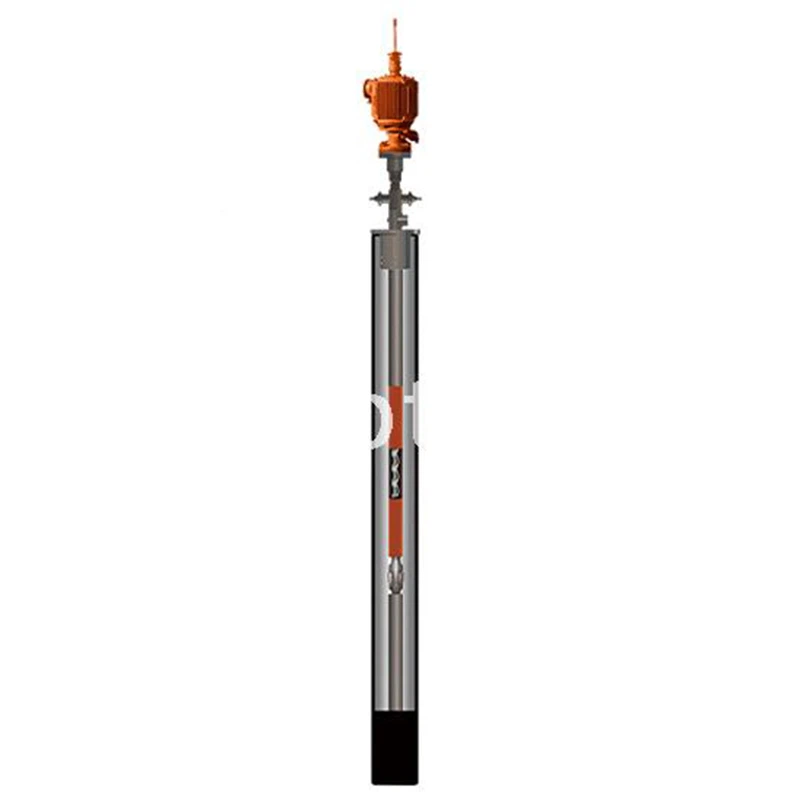
One-Screw Pump
These pumps are named PC pumps otherwise progressive cavity pumps and worm Pumps. Generally, these types of pumps are not considered within the family of the screw pump. Because the rotor in these pumps is not like a usual screw but somewhat a twisted round shaft.
Two Screw Pump
These pumps are also named the double screw pump, and it is the most general type used high power applications like weighty oil tube transfer. The screws in the pumps are driven from the motor, & timing gears are generally included to turn the next screw.
Three Screw Pump
These pumps are also named triple screw pumps, and these are usually used in small applications like lubrication systems. The screws in the pump are determined from the motor to rotate the remaining two screws which are around it without using timing gears.
Four Screw Pump
These pumps are basically two screw pumps, however with two screws for each rotor in opposite directions. These pumps absorb the liquid within the suction port, then divide evenly & are routed to both pumps’ ends.
Five-Screw Pump
These pumps are mostly similar to a triple screw pump; however, with five screws, not three screws. Similar to the 3-screw pump, this pump includes one diving rotor that drives all the remaining screws. This type of pump is frequently used in many applications like tube oil otherwise hydraulic.
Driver Screw
It’s a screw pump’s spinning component. The driver screw connects to the motor’s driving shaft. It aids in the consistent volumetric flow rate of fluid pumping. The timing gear is connected to one end, while the drive shaft is connected to the other.
Driven Screw
High-tensile steel metal is also used for the driven screw. Because of the movement conveyed by the timing gear, it rotates around its axis. It spins in the opposite direction as the driver’s gear. The clearance area of this screw is constant. This aids in catching water inside the restricted space.
Timing Gear
The timing gear drives the driven screws in such a way that the female and male rotor assemblies do not make metal-to-metal contact. It establishes a link between the driver and driven screws. The driver screw rotates the timing gear, which then transmits that rotation to the driven screws. It drives screws in this manner. Even if the pump is turned off for a short time, it guarantees that no such connections are made.
Inlet & Outlet Ports
The intake and exit ports of a screw pump are distinct. The water is sucked into the pump through the intake port, and it is discharged through the output port. When the pump ultimately stops, the inlet and output are designed to ensure that there is enough liquid medium. This aids in the delivery of the pump’s initial liquid medium. As a result, the suction tube should not dry out quickly, even if it is empty or dry.
Pressure Relief Valve
Screw pumps are a type of positive displacement pump that builds pressure even while the outlet is closed. This builds up pressure, which can lead to major problems including pump internal part damage and harm to the pump operator. As a result, every positive displacement pump has a relief valve to safeguard the pump, the operator, and any associated gear. Extra pressure is returned to the intake using this valve. Recirculating the exit fluid is another well-known method of reducing extra pressure.
Bearings
During pump operation, the top bearings of a vertically mounted screw pump sustain heavy loads as well as axial and radial stresses. As a result, the load on the lower bearings is minimal.
Driving Shaft
The driving shaft links the pump assembly to the drive motor. This connection is made possible by the use of the proper set of flexible couplings.
The screw pump is a commonly used pump for conveying viscous liquids. It has the advantages of a simple structure, stable operation, low noise, high efficiency, and long life. However, if the maintenance and repair of the screw pump are not paid attention to, its performance and service life will be affected, and even failure and damage will be caused. Therefore, in the process of using the screw pump, we should follow the following principles:
● Regularly check the working status of the screw pump, observe the flow rate, pressure, temperature, vibration, noise, and other indicators of the pump, and find and eliminate abnormal phenomena in time.
● Regularly replace the lubricating oil of the screw pump to keep the oil clean and prevent the oil and impurities from wearing and corroding the pump. Under normal circumstances, the lubricating oil should be replaced every 1000 hours or so.
● Regularly clean the inlet and outlet filters of the screw pump to prevent clogging and contamination. The filter should choose the appropriate specification and model according to the viscosity and impurity content of the liquid to ensure the stability of flow and pressure.
● Regularly disassemble the main parts of the screw pump, check the degree of wear of the screw, sleeve, bearing, seal, and other parts, and replace or repair as necessary. When disassembling and installing, care should be taken to keep the parts clean and intact to avoid damage or wrong installation.
● Regularly carry out performance tests on screw pumps, detect pump efficiency, flow characteristics, pressure characteristics, and other parameters, evaluate the working conditions of the pumps, and determine the period and content of maintenance and overhaul.

Daily maintenance
Daily maintenance refers to the basic inspection and treatment before and after each use of the screw pump or every day, mainly including the following aspects:
● Check whether the power supply is normal, whether the motor is overloaded, and whether the steering is correct.
● Check whether the inlet and outlet valves are closed, whether the pipeline is unobstructed, and whether there is any leakage.
● Check whether the shaft seal is leaking, whether the packing or mechanical seal is worn, and whether it needs to be replaced or adjusted.
● Check the oil level, oil quality, and oil temperature of the lubricating oil, and whether it needs to be replenished or replaced.
● Check whether the cooling water, sealing oil, and lubrication system are working normally and whether there are defects such as leakage, leakage, etc.
● Check whether the coupling is aligned, loose, or damaged.
● Check whether the clearance of the synchronous gear is appropriate and whether there is wear or abnormal sound.
● Check whether the operating parameters of the screw pump, such as flow, pressure, temperature, vibration, etc., are within the normal range.
● Check whether safety valves, pressure gauges, and other accessories are intact and reliable and whether they are stuck or malfunctioning.
● After transporting rubber or sewage media, the remaining media in the pump chamber should be cleaned with clean water in time, and the accumulated fluid should be drained to avoid failures such as blockage, jamming, and difficulty in opening.
Regular maintenance
● Check the working conditions of the screw pump every day, observe whether there are abnormal sounds, vibrations, temperature rise, leakage, etc., and find and deal with problems in time.
● Check the lubricating oil of the screw pump every week, check the oil level, oil quality, oil temperature, and other indicators, and replace or supplement the lubricating oil as needed. The quality and quantity of lubricating oil directly affect the operating efficiency and life of the screw pump.
● Check the seals of the screw pump every month, such as shaft seals, packing, etc., check for wear, aging, deformation, etc., and replace or adjust the seals as needed. The state of the seal directly affects the sealing performance and safety of the screw pump.
● Check the bearings of the screw pump every quarter, such as rolling bearings, sliding bearings, etc., check for wear, damage, looseness, etc., and replace or adjust the bearings as needed. The state of the bearing directly affects the smooth rotation and noise level of the screw pump.
● Check the main parts of the screw pump every year, such as screw, casing, inlet, and outlet, etc., check for cracks, deformation, corrosion, etc., and replace or repair parts as needed. The state of the main components directly affects the delivery capacity and reliability of the screw pump.
Certifications


Has a mature technology team, business team and operation team, for foreign clients to provide optimal solutions of complete sets of mechanical & electrical products and services (All kinds of pump, motor, control system, compressor, oil field equipment, well head, pipes, casing & accessories, tubing, fishing tools, etc.)
FAQ
As one of the leading screw pump suppliers in China, we warmly welcome you to buy bulk high-grade screw pump made in China here from our factory. All customized products are with high quality and competitive price.
