

Centrifugal Pump
Why Choose Us
Our History
The company founded in 2009
Our Certificate
SGS Audited Supplier
Product Application
Industry Agriculture, Petrochemicals, fire system, Electricity, municipal, etc...
Production Market
Southeast Asia, Middle East, Russia, South America, Africa
Centrifugal pumps are commonly used in various industries for fluid transportation. They work by converting rotational energy into kinetic energy, propelling the fluid through the pump. These pumps are efficient, reliable, and suitable for a wide range of applications such as water supply, wastewater treatment, and chemical processing.
-
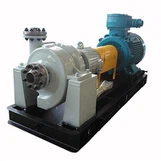
 Z Series Single Stage Chemical PumpZ series petrochemical process pump is designed according to the specifications of API610 (OH1, OH2) and VDMA24297 (light, medium and heavy type). It has four series, namely, ZA (ZAO) type, ZE (ZEO)Add to Inquiry
 -
 CZ Series Single Stage Chemical PumpCZ series single stage chemical pump are designed and manufactured according to ISO 5199 - ISO 2858 Norms and therefore suitable for process applications in the chemical industry as well as heavyAdd to Inquiry
 -
 ZX Series Self- Priming PumpZX series self-priming chemical pump are applicable to conveying the clean liquid or liquid containing less than 2% solid grain of neutral or corrosive at any temperature, and suitable forAdd to Inquiry
 -
 ASME/ANSI Series Chemical PumpASME/ANSI series chemical pump is single stage, single suction, horizontal cantilever centrifugal pump. Including A basic, AZ-based self-absorption, AG pipe-type three types.Add to Inquiry
 -
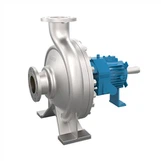
 IS Series Single Stage Centrifugal PumpIS series single stage centrifugal pump design is in accordance with international standards of ISO2858/5199, which means IS Series pumps are interchangeable with other similar pumps, conforming toAdd to Inquiry
 -
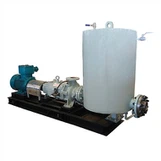
 XL Series Low Flow Petrochemical PumpXL series low-flow process pumps are applicable to conveying the clean or containing less than 2% solid grain liquids of any temperature and neutral or corrosive.Add to Inquiry
 -
 IH Series Chemical PumpIH series chemical pump are single-stage, single-suction, cantilever centrifugal pumps, and are energy-saving products that replace F-type centrifugal pumps by the mechanical department.Add to Inquiry
 -
 AY Series Processing PumpAY series processing pump are the center support (OH2) or between-bearing (BB2) structure and the pumps with single or two-stage impeller can be manufactured and supplied.Add to Inquiry
 -
 SM Series Axial Split Double Suction PumpSM series axial split double suction pump is axial-split double-suction centrifugal pump, horizontally-mounted and suitable for conveying clean medium or media containing micro solid particles.Add to Inquiry
 -
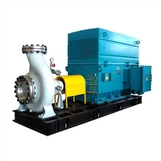
 DSM Series Double Stage Radial Split PumpDSM series heavy-duty petrochemical process pump is a horizontal, single or two-stage, radially split centrifugal pump equipped with double-suction or single-suction impeller and both-end and centralAdd to Inquiry
 -
 DMS Series Axial Split Multistage PumpDMS series axial split multistage pump is multi-stage, horizontal, axial split; center line installation, support at both ends. The impeller is installed back-to-back to balance the axial force, theAdd to Inquiry
 -
 DMC Series Radial Split Multistage PumpDMC series radial split multistage pump is a horizontal, multistage ring-section centrifugal pump with high efficiency and low NPSHr. The design standard conforms to the API610 Petrochemical andAdd to Inquiry
- Tel: +8613953308355
 Whatsapp: +8613953308355
 Wechat: +8613953308355
- Email: boshanpumpzp@163.com
- Add: Room 817, Building 5, No.111 Liuquan Road, High-Tech Zone, Zibo, Shandong, China
Applications of centrifugal pumps
Industrial applications
Centrifugal pumps are widely used in industrial applications, such as chemical processing, oil and gas production, and power generation. They are used to transport chemicals, fuels, oils, water, and wastewater. In chemical processing, centrifugal pumps are used to transfer liquids between different process stages, while in oil and gas production, they are used to transport crude oil and natural gas.
Domestic applications
Centrifugal pumps are used in domestic applications, such as water supply and HVAC systems. In water supply systems, centrifugal pumps are used to boost water pressure and transport water from a well or a municipal water source to a building’s plumbing system. In HVAC systems, centrifugal pumps are used to circulate water or other fluids through heating and cooling systems, ensuring that the building’s temperature is maintained at a comfortable level.
Agricultural applications
Centrifugal pumps are used in agricultural applications, such as irrigation and water management. In irrigation, centrifugal pumps are used to pump water from a well or a water source to a field, providing water for crops. They are also used in livestock farming to pump water to animals in remote locations.
Bearings
These reduce friction between moving part and ensures rotation remains as per the required motion.
Bushing Or Spacer Sleeve
Bushings or Sleeves act as a sacrificial part within pumps absorbing abrasion and shocks from thrust.
Circlip, Snap Ring, Retaining Rings or Seeger
A fastener with open ends containing 2 holes which can be internal or external.
They are placed in a machined groove to allow rotation but prevent axial movement. They can be used on a shaft for holding elements in place such as a motor fan blade, a bearing or a seal.
Coupling
A coupling is used to connect both the motor and pump shaft ensuring both shafts rotate at the same speed and in the same plain and is responsible for transferring both torque and speed between the two parts. The coupling can be rigid or flexible.
Drain Plug
Drain plugs are situated at the lowest and highest point of pump casings and used to either fill the pump with fluid before startup or drain the casing of fluid before disconnection from the pipework and maintenance.
Diffuser
A diffuser contains a series of vanes which surround the impeller which act to reduce the velocity of the fluid, resulting in an increase of pressure.
Flange
Used to attach pipework to the pump
Gasket / Paper Joint Sealing
Paper joint sealing is used between the joints of multistage and side channel pumps ring sections as when the sections are pressed against each other they do not create a seal without another material.
Impeller
The impeller rotates at the same speed as the pump shaft and is responsible for producing the flow and pressure in the pump.
Impeller Nut
The end of the shaft where the impeller slots onto the shaft is usually thread with an impeller nut fastened to keep the impeller held onto the shaft.
Lip Seal
These are used to seal around the shaft or bearings and are limited to low pressures. They are better suited for thin, non-lubricating liquids, used in smaller pumps, and held in place with a cover.
Mechanical Seal / Packed Gland
A pump head is sealed via the use of a mechanical seal or packed gland. A mechanical Seal seals around the shaft, and pump casing. This seal consists of two faces and a spring which press against each other forming a seal and are cooled by the pumped fluid.
Motor and dash; Electric, Hydraulic or Engine
The motor is used to transfer power to the pump head by converting electrical, hydraulic, or mechanical energy into rotational mechanical energy, which is used to rotate the motor or output shaft, which in turn rotates the coupling, and pump shaft. This in turns rotates the impeller producing flow and pressure.
Oil Filling Plug
Used for filling bearings with oil without dismantling of pump
Oil Sight Gauge
Used to view the amount of oil contained within a chamber such as an oil lubricated bearing housing, or gearbox.
O Rings
O Rings are used to seal around metal parts such as within the pump casing, or around drainage ports as metal is unable to create a seal without an elastomer, silicone, or plastic, acting as a barrier.
Shaft
The shaft is connected to the driving motor, and ensures the rotational movement is carried into the head of the pump, rotating the impeller at the same speed as the motor shaft.
Shaft Key
An impeller is held onto the shaft via the use of a key – a small rectangular bar piece of metal made in the same material as the shaft, which slots into a groove in the shaft and in a notch in the impeller.
Stud Bolt
An externally threaded fastener with an appearance similar to a hexagonal bolt without the head. They can be used on flanges or as tie bolts.
Stuffing Box
Where gland packing is placed to ensure sealing of the pump head.
Suction & Discharge Stage Casing
In a multistage and side channel pump, multiple impellers are housed with stage casings consisting of a suction and discharge casing. They are designed to fit around the impeller in a specific orientation, and contain an inlet port, equalization holes, outlet port and in a side channel pump a channel to handle both liquids and entrained gas.
Tiebolt
Tiebolts are used in Multistage and side channel Pumps to keep ring sections of the pump tightly connected.
Thrower
A raised ring located on a shaft to throw or scatter oil.
Volute
The volute is a piece of metal that forms part of the casing surrounding the impeller. It is responsible for ensuring pump efficiency and controls the amount of pressure generated by the impeller.
Washer
Washers are used around bolts to ensure any tightening torque is evenly distributed around the fastener.
Wear Rings
Wear rings are mounted either side of the impeller and help to maintain pump efficiency as well as protect the main pump casing from wear.
A pumps Net Positive Suction Head Requirement (NPSHR) may increase by 50% due to a doubling of wear ring clearances.

The maintenance of centrifugal pumps involves:
Determine the maintenance frequency with which the pumps should be checked and repaired. A certain time frame should be set to check the pump and verify if it is still working properly or as required.
Inspection and replacement of mechanical parts should be done regularly. The inspection can be a quarterly inspection, routine inspection or annual inspection. This inspection involves steps such as checking pipe lines for leakages, checking bearing temperature, increased vibration, unnatural and uneven noise, stuffing box, mechanical seal, discharge pressure and operating current. For annual inspection, check if all mount points are secure, clean filter, inspect pump flange for leaks, replace the mechanical seal, inspect coupling, replace lubricating oil and check shaft alignment.
Changing the pump's lube oil is part and parcel of the annual inspection routine or the scheduled maintenance. It is essential to prevent bearing damage. One should remember to follow the manufacturer’s guidelines when it comes time to lubricate the motor. Be careful not to over or under lubricate the system. The damage to the pump may be greater in case of over greasing than in under greasing, to prevent this, the manufacturer’s instructions must be followed. There is a need to frequently lube if the pump is used frequently on a daily basis.
Inspecting the electric motors as a way of preventive maintenance is very important. Checking the insulation resistance of connections, ensuring all connections are properly and tightly secured, inspecting the motor for any signs of blocked or overheating the vents.
Corrosion Resistance
Centrifugal pumps have a proven track record in terms of durability. The secret lies in their ability to withstand high levels of corrosive liquids from various chemicals. Chemical distributors and manufacturers as well as those handling highly corrosive fluids can carry out a wide range of applications without any perpetual fear of skyrocketing wear and tear costs. Thanks to the potential of extended service life with centrifugal pump’s reliability, you stand to enjoy an enhanced return on investment.
Energy Efficiency
In any industrial setup that utilizes pumps, energy costs are consistently one of, if not, the largest elements regarding pump systems. Nonetheless, trends in industries seem to favor centrifugal pumps over other pump systems when it comes to energy savings. Whatever the applications in question are, industries could certainly benefit from efficient energy use, more so if the applications involve a series of multiple centrifugal pumps.
Smooth Flow
Another centrifugal pump benefit has to do with its flow. The impellers inside the pump move in a smooth rotating motion that supplies an even pressure throughout the fluid. This, consequently, leads to a more uniform discharge of fluids compared to a positive displacement pump’s pulsating and erratic motion. The downside of having an uneven and pulsating fluid motion, is it forces engineers to make special design considerations in pipes to prevent cracks and other forms of weaknesses along the pipes. This can potentially cause design, installation, and operational costs to spiral.
Proven Reliability
There is a reason why people keep coming back to centrifugal pumps for long-term fluid transfer applications. It is because they have a proven track record in reliability. They tend to have a more rugged design than reciprocating pumps which enhances their durability.
Low Maintenance
Centrifugal pumps usually require less maintenance than positive displacement pumps, even though both have fairly straightforward maintenance routines. How so? Centrifugal pumps have fewer moving parts than positive displacement pumps, which means they often have a longer performance time. Additionally, with fewer moving parts, repair times are likely to be shorter and less costly in the event an issue arises.
Size Versatility
Another centrifugal pump benefit is the fact that its design allows it to occupy much less floor space for the same capacity than reciprocating pumps. Furthermore, if you want a centrifugal pump with a larger capacity, all you have to do is increase the speed of the impeller as well as the sizes of the inlet and outlet diameters.
Application Versatility
Centrifugal pump configuration is not a one-size-fits-all deal for all applications. Depending on the objectives and applications, the pumps can be adjusted to meet varying industry needs. we take great pride in offering diverse pump configurations that accommodate all budget ranges and are suited for multiple uses.
Minimal Noise
Unlike positive displacement pumps, a well-functioning centrifugal pump produces little noise while in operation. You can’t expect complete silence; a centrifugal pump produces a steady, constant noise. In an industrial setting, where there are likely unpleasant sounds and noise coming from several machines, a steady centrifugal pump is a welcoming system. That said, there can be times when a centrifugal pump produces persistent irritating sounds. It often happens when, for one reason or another, the pump fails to deliver sufficient pressure or impeller vanes are compromised. However rare, if your configuration produces an unusual sound, have it checked by a specialist as soon as possible.
Less Frictional Losses
Centrifugal pumps have been designed to minimize frictional losses arising from internal surfaces as well as internal turbulence. By incorporating an innovative design, bends in the pumps are seamless and are deliberately fashioned to avoid eddies. A forward-thinking approach to fitting, valve, pipe, impeller and reducer design enables centrifugal pumps to achieve a high level of efficiency and durability.
Types of Centrifugal Pumps
12V Pumps
These pumps operate 12 V DC, with a maximum flow of 330 GPH. It consists of alligator clips, a battery cable, and an on/off switch for ease when operating. The lowest height of water being pumped out can be 1/8 inches with the suction strainer, and the largest height of water being lifted is 40 feet. 3/4 inches garden hose adapter at both outlet and inlets, 6 feet suction hose, gasket for replacement, and an extra impeller. It can be portable due to its lightweight. In that case, a carrying handle can be attached to the body for convenient use.
Chemical Pumps
Chemical pumps are designed specifically for use in pumping chemicals that are resistant to corrosive materials, which makes it suitable for handling corrosive and abrasive industrial liquids such as paint, fuel, solvent, bleach, and many others. A pump that contradicts the chemical can result in brittleness or dissolving, swelling, and ultimately it will leak and fail. Special consideration needs to be given to the materials of a chemical transfer pump, along with the concentration and temperature of the fluid being handled. Whenever there is required a chemical dosing pump, one for tank to tank transfer or a barrel emptying pump, the pump can be tested.
Radial Pumps
In radial centrifugal pumps, the fluid comes out of the impeller after rotating for 90 degrees relative to the suction. Many centrifugal pumps are found in this category. Fluid enters through the horizontal suction flange and leaves through a vertical outflow flange. The discharge will be perpendicular to the pump’s shaft. This design is commonly used when there is a flow limitation and a need to raise the discharge pressure. Thus, radial design is a low flow rate and a high-pressure pump. Most pumps that are used in the gas and oil industries fall into this category.
Axial Pumps
In an axial flow centrifugal pump, the fluid can move parallel to the shaft. This procedure is the same as the working of a propellant. The most important application of this pump is when there is a huge flow rate and very little pressure head. For instance, they are common in water circulation pumps and dewatering pumps.
Mixed Pumps
As the name states, in a mixed flow centrifugal pump, the fluid flow mixes both axial and radial properties. That is a trade-off between radial and axial pumps. Mixed pumps operate at a much larger flow rate with a decent increase in the head.
Single Suction Pump
In a single-suction centrifugal pump, the flow of the fluid is directed into the inlet, and the rest of the liquid immediately flows into the impeller eye, which is the inlet of the impeller. By the time when the water leaves the impeller, pressure is produced by the centrifugal force.
Double Suction Pump
Single-suction will be inadequate when the flow rate is too high. In such a case, double suction centrifugal pumps are utilized. The pump’s impeller is engineered so that the fluid enters from all sides as compared to the single side in a normal case. Nevertheless, the name "double suction" should not be confusing. Even in the double suction pump design, there is only a single flange discharge and suction. The difference is in the design of the casing and impeller.
Single Volute Pump
In centrifugal pumps that have a single volute casing, the flow is discharged from the impeller and goes into one volute, which winds completely around the impeller. This single volute casing has one cut-water that transports the fluid flow towards the pump’s outlet. Most of the centrifugal pumps in the refinery are of single volute types.
Certifications


Has a mature technology team, business team and operation team, for foreign clients to provide optimal solutions of complete sets of mechanical & electrical products and services (All kinds of pump, motor, control system, compressor, oil field equipment, well head, pipes, casing & accessories, tubing, fishing tools, etc.)
FAQ
As one of the leading centrifugal pump suppliers in China, we warmly welcome you to buy bulk high-grade centrifugal pump made in China here from our factory. All customized products are with high quality and competitive price.
