

Vacuum Pump
Why Choose Us
Our History
The company founded in 2009
Our Certificate
SGS Audited Supplier
Product Application
Industry Agriculture, Petrochemicals, fire system, Electricity, municipal, etc...
Production Market
Southeast Asia, Middle East, Russia, South America, Africa
A vacuum pump is a piece of equipment capable of generating a partial or low-pressure vacuum by pushing gas or air molecules out of a sealed chamber. A vacuum is a relative state at which the chamber pressure has a lower pressure than the ambient atmosphere or adjacent systems. This is different from absolute vacuum, where the pressure is at 0 Pa and devoid of gas molecules.
-
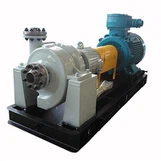
 2BEA Series Liquid Ring Vacuum PumpsThe liquid ring vacuum pumps and compressors of 2BEA series are high-efficient and energy-saving products on the basis of the scientific achievements and production experiences over the yearsAdd to Inquiry
 -
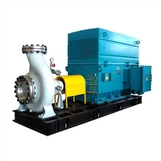
 2BEC Series Of Water Ring Vacuum Pumps2BEC series of water ring vacuum pumps and compressors are high-efficiency and energy-saving products on basis of our many years research results and experiences in production and combine with theAdd to Inquiry
 -
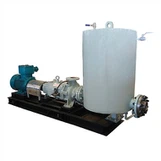
 2BV Series Water Ring Vacuum Pumps2BV series water ring vacuum pumps are suitable for pumping the gases and steam. Its suction pressure can reach 33mbar (abs) (i.e. 97 % vacuum degree). If the transformer oil is used as the operatingAdd to Inquiry
 -
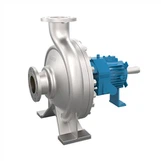
 SK Series Of Water Ring Vacuum PumpsSK series of water ring vacuum pumps and compressors are used to pump or compress air or the other gas that is non-corrosive, insoluble in water, no solid particle contained by forming vacuum andAdd to Inquiry
 -
 SZ Water Ring Vacuum PumpSZ series of water ring vacuum pumps and compressors are used for sucking and compressing air or other uncorrosive, insoluble gass which do not contain solid particle, to obtain a certain vacuum or aAdd to Inquiry
- Tel: +8613953308355
 Whatsapp: +8613953308355
 Wechat: +8613953308355
- Email: boshanpumpzp@163.com
- Add: Room 817, Building 5, No.111 Liuquan Road, High-Tech Zone, Zibo, Shandong, China
The two main classifications of vacuum pumping principles are gas transfer and entrapment. Gas transfer is further divided into positive displacement and momentum transfer. To further grasp the concepts of vacuum pumps, it is best to understand the three types of flow: viscous, transitional, and molecular. Viscous or continuous flow occurs at high pressures to medium vacuum. In this type of flow, the gas is dense enough for gas molecules to collide with each other. The mean free path or the average distance traveled by a gas molecule is less than the dimensions of the chamber. When a higher vacuum is reached, the gas molecules tend to collide on the walls of the chamber more than other gas molecules. Transitional flow occurs when the viscous flow starts to change into molecular flow. Molecular flow is characterized by the random movement of gasses where their mean free path is much longer than the dimensions of the chamber.
Fluids flowing under viscous flow can be pumped mechanically by positive displacement pumps. However, molecular flow will be reached when the gas cannot be evacuated by pressure difference. At this point, another pumping system, either momentum transfer or entrapment, is used. Most high vacuum systems have two pumps in tandem. Positive displacement pumps alone are not sufficient at higher vacuum. Momentum transfer pumps will stall if the system is operated at viscous flow. Entrapment pumps will be frequently regenerated or exhausted when there is too much gas to be captured particularly at viscous flow.
Types of Vacuum Pumps
Liquid ring: Liquid rings operate using a liquid, typically water. An impeller with an axis eccentric to the housing rotates the liquid, spinning the liquid out towards the impeller housing. This offset rotation and force result in a liquid ring, which is where this pump gets its name. Air and other gasses get sucked in as the space between the impeller and the ring expands, and as the impeller rotates, the molecules get compressed, where the gas is then expelled. This type of pump is common in environmental, textile, mining and chemical industries because of its air-purifying properties and commonly comes in one- and two-stage variants.
Articulated piston: An articulated piston pump works much like that of a car engine. When the piston moves down, air and gasses are pulled into an intake valve. When the piston moves back up, the air molecules are pushed out the exhaust valve. Piston pumps can use one or more pistons to move air. They are well-suited for applications that require high suction and flow rates.
Claw: Claw vacuum pumps use two continually rotating rotors that never come in contact with each other. This rotation moves gasses and air from the intake side to the output side, pulling vacuum. These vacuum pumps are popular in the medical field because they are oil-free, eliminating the possibility of contamination.
Rotary vane: Rotary vane pumps use offset rotating vanes in a cylindrical case to create positive displacement. As the vanes move around the eccentric rotor, air and gas molecules get trapped between the vanes and are moved from the inlet to the outlet port, creating a vacuum. This type of pump is used in a range of industries like medical, environmental, food processing and air conditioning systems.
Rotary screw: Rotary screw pumps also use positive displacement to create a vacuum. Two spiral-shaped rotors rotate in opposite directions. The opposite rotations trap air and create compression to move the molecules to the discharge port. Rotary screw vacuum pumps are often used in industrial applications that handle clean gasses.
Diaphragm: Diaphragm vacuum pumps use positive displacement to move air and liquid. Two flexible walls move back and forth, forming a vacuum. The diaphragm walls’ motions simultaneously push and pull air and liquid in and out of the pump. These pumps are highly resistant to corrosion and are commonly used in the food industry, cosmetic industry and chemical industry.
Scroll: Scroll vacuum pumps compress gas and liquid through the use of two spiral-shaped scrolls. One spiral is stationary, and the other spiral rotates around it eccentrically, creating pressure that compresses the gas and liquid particles. This type of pump can be found in mining, pharmaceutical and environmental industries.
For utmost reliability, routine maintenance should be conducted on your vacuum pumps, regardless of the type. Routine maintenance helps prevent vacuum pumps from breaking down, which would result in costly emergency repairs and process disruption. Taking care of these components will help increase their longevity and can ultimately save you money in the long run. While some maintenance can be done in-house, you may want to consider hiring a specialist to ensure proper maintenance.
Change the Oil Regularly
Although new technologies with vacuum pumps, like Quincy Compressor’s QSV Rotary Screw Vacuum Pump, has less oil carryover than older pumps, oil contamination is one of the biggest areas of concern for pump maintenance. Vapors and moisture can contaminate the oil, reducing its lubricity and overall effectiveness. Oil also naturally deteriorates over time. While routine oil changes may be time-consuming and interrupt your processes, it’s one of the most important areas of maintaining your vacuum pump.
Internal Inspection and Cleaning
Another part of routine maintenance includes dismantling your pump and inspecting the individual parts. This measure should be done every 3,000 hours of operation or more often, depending on the level of use. Inspect the belts to ensure they’re free of oil, as this could indicate a leak. Replace belts that show signs of cracking or rubbing against other parts.


Changing Damaged Components
Your vacuum pump maintenance steps may reveal worn or damaged parts that are not directly impacting the equipment’s performance. However, not upgrading these components immediately could eventually affect the functioning of other systems and cause an unexpected mechanical failure. Completing this step promptly can also be more cost-effective, as it could prevent a costly repair job or an earlier-than-anticipated machine replacement.
Do a Test Run
Conducting a test run on your pump is an effective way to ensure everything is operating properly and safely. It’s also important to compare pump performance before and after maintenance, as significant differences between the two could indicate improper reassembly, part failure or other issues. Run the vacuum pump and listen for any abnormal noises that may indicate damage or leaks. Ensure the pump is operating at a safe temperature to reduce the chances of overheating. This aspect of maintenance is essential, especially if your pump has been sitting for a few months. Turn it on to ensure it will operate correctly after its break.
Enhanced Process Efficiency: Vacuum pumps are crucial in processes like composite molding, where they apply pressure to liquid matrix materials, facilitating the transformation into dry preformed reinforcing materials. This ensures the efficient and effective production of composites.
Protection of Sensitive Components: In the production of electric lamps and bulbs, vacuum pumps remove air from the interior, preventing the filament from overheating and burning out. This extends the lifespan of the bulbs and enhances their performance.
Precision in Material Handling: Industrial vacuum pumps power suction cups used in cutting glasses and stones, providing the necessary precision and control for intricate work. This application ensures accurate cuts and minimal material wastage.
Safety and Containment: Vacuum pumps create negative pressure environments, which are essential in preventing the leakage of hazardous materials. This is particularly important in medical and pharmaceutical settings where containment is crucial to prevent contamination and protect personnel.
Versatility Across Industries: Vacuum pumps are used in a wide array of industries including food and beverage, semiconductor, medical, and more. They are integral in applications like vacuum packaging, component drying, and bottle filling, enhancing product quality and safety.
Reduced Contamination and Maintenance: Dry vacuum pumps, in particular, offer the advantage of no contamination and minimal maintenance requirements. This reduces operational costs and downtime, making them a preferred choice in sensitive environments like laboratories and medical facilities.
Customization for Specific Needs: Different applications require different levels of vacuum, ranging from rough vacuum for agri-food industry uses to ultrahigh vacuum for particle acceleration. This adaptability ensures that vacuum pumps can be tailored to meet the specific needs of various processes, optimizing their effectiveness and efficiency.
Top Tips For Vacuum Pump Maintenance
Check the oil regularly
This is the most important thing you can do to keep your pump running smoothly, as dirty oil can cause your vacuum pump to become saturated with contaminants, which reduces its efficiency. Change the oil according to the manual or if it looks dirty or smells off.
Warm up the pump with the inlet blocked.
To prevent vapours from condensing in the pump oil, run the pump for around 20-30 minutes with the inlet blocked before you connect it to your vacuum application. Installing a manual valve in-line will simplify the warm-up procedure.
Ensure the pump outlet isn’t blocked.
If the pump outlet is blocked it will, at best, cause the pump to stop. If you’re unlucky the overpressure in the pump will loosen the seal around the oil sight-glass, causing leaking, which will require repairing.
Protect the pump from corrosive vapors withan inlet cold trap.
A cold trap used at the inlet will protect the pump from corrosive vapours and reduce the vapour load on the pump, meaning it will operate more effectively. Make sure it is cold enough for your solvents. Liquid nitrogen, for example, should be used for very volatile solvents.
Use gas ballast when working with condensable vapors.
When pumping gas in a vacuum system, it will undoubtedly contain some vapour.
During the compression process, this vapour will condense, which if not removed will form a contaminant that will prevent the pump from achieving its optimum vacuum pressure. It may also enter the pump’s mechanism where it can have a detrimental effect.
A gas ballast valve incorporated into the system will allow a flow of air into the final part of the compression cycle and allow the vapour to be expelled without condensation or affecting the pump’s overall performance.
Protect the pump from particulate with an inlet filter
To keep abrasive particulates out of your pump oil and rotating mechanism use an inlet separator. Rubbing a little oil between your fingers will tell you whether there are particulates present. Installing an inline filter will extend the life of your oil.
Run the pump after use to purge solvents from the oil.
To purge solvents in the oil and reduce internal corrosion during the shutdown it can be useful to block the pump inlet, open the gas ballast and run the pump for a few minutes before shutting it off. Operating the pump near its ultimate vacuum level but with good airflow will help to prolong its life and keep it free from contaminants.
Certifications


Has a mature technology team, business team and operation team, for foreign clients to provide optimal solutions of complete sets of mechanical & electrical products and services (All kinds of pump, motor, control system, compressor, oil field equipment, well head, pipes, casing & accessories, tubing, fishing tools, etc.)
FAQ
As one of the leading vacuum pump suppliers in China, we warmly welcome you to buy bulk high-grade vacuum pump made in China here from our factory. All customized products are with high quality and competitive price.
