

Electric Control Cabinet
Why Choose Us
Our History
The company founded in 2009
Our Certificate
SGS Audited Supplier
Product Application
Industry Agriculture, Petrochemicals, fire system, Electricity, municipal, etc...
Production Market
Southeast Asia, Middle East, Russia, South America, Africa
Control cabinets perform many other important functions, including: supply power to the equipment; control the start-up and operation of equipment and systems; allow complex electronic apparatus to be organised and structured; protect against unauthorised access to the apparatus.
-
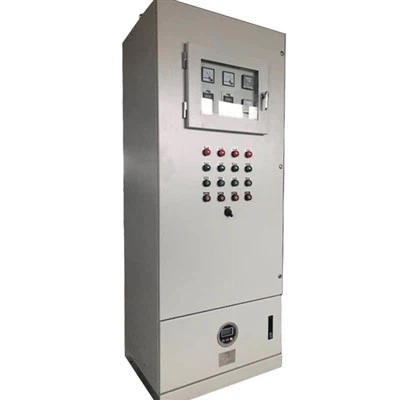 Positive Voltage Type Explosion-proof Distribution CabinetPBb Series Positive voltage type explosion-proof distribution cabinetAdd to Inquiry
 -
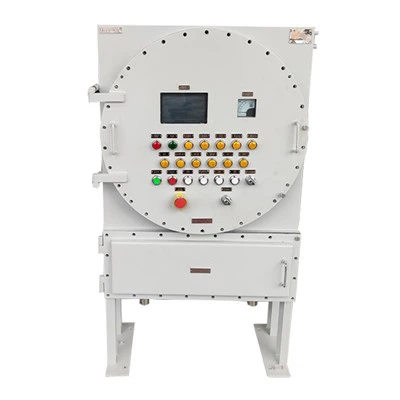 Explosion-proof Control BoxExplosion-proof type protection grade is IP65. Suitable for flammable and explosive occasions (coal mine. Chemical industry. Oil. Electric power and other industries), high safety factor, strongAdd to Inquiry
 -
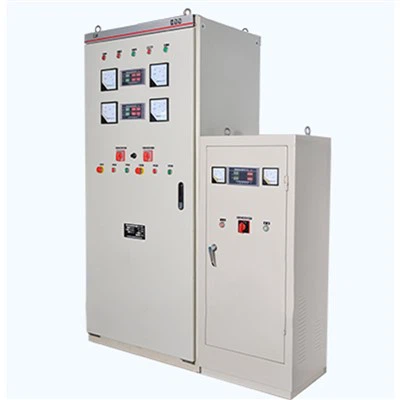 GGD Low Voltage SwitchgearGGD low voltage switchgear is a new type of fixed low voltage switchgear developed and widely used. The switchgear conforms to IEC439-1 Low-voltage switchgear and control equipment, GB7251Add to Inquiry
 -
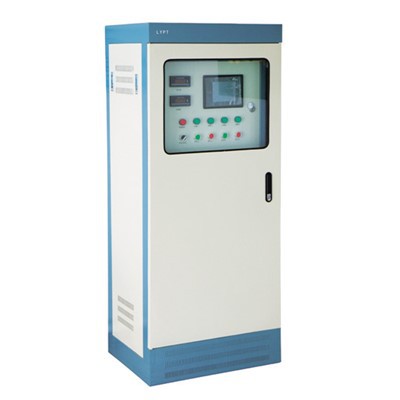 KYN28A-12 Switch CabinetGKYN28A-12 type indoor metal armored withdrawable switchgear is a complete set of distribution equipment for 3-10kv three-phase AC 50Hz and single-bus segmented system.Add to Inquiry
 -
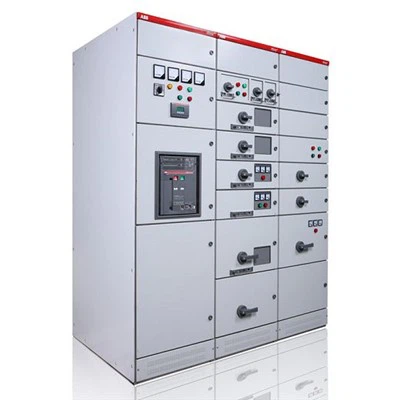 Auto-transformer Starter CabinetThis series of products is suitable for AC 50HZ(or 60HZ), voltage is 380V, power from 18.5-315KW three-phase squir-cage induction motor for self-coupling reduced pressure starting, and can accelerateAdd to Inquiry
 -
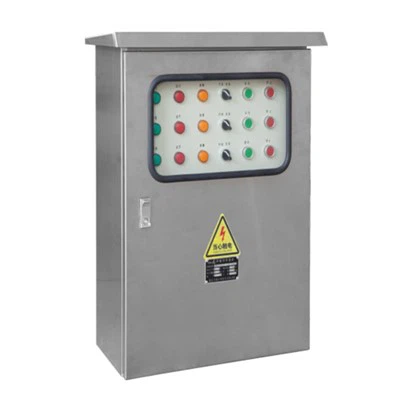 Special Control Cabinet for Submersible PumpJK2 series special control cabinet for submersible pump which has an integration of motor starting and water pump protection and owns the PLC interface. For the water pump & motor, the controlAdd to Inquiry
- Tel: +8613953308355
 Whatsapp: +8613953308355
 Wechat: +8613953308355
- Email: boshanpumpzp@163.com
- Add: Room 817, Building 5, No.111 Liuquan Road, High-Tech Zone, Zibo, Shandong, China
Non-Electrical Components
We will look into non-electrical components first because there are only usually two of them and they are straightforward to understand.
Enclosure
The enclosure is the metal box that houses the other components of an electrical control panel. It comes in varying sizes, materials, and specifications to match the exact needs of the processes the panel is used for and the environment the enclosure is in. The number of doors indicate the sections of the enclosure and plays a part in determining its size. The enclosure is typically made from steel, but different materials can be used based on the application.
Back Panel
Back panels are metal sheets mounted inside the enclosure. These panels hold DIN rail mounting and wiring ducts. DIN metal rails provide a standardized mounting structure for the electrical devices that are to be attached. The wiring ducts serve as pathways for wires connecting the electrical devices. The ducts help in keeping components organized and noise between devices managed.
Electrical Components
These are the components that use electricity. They can further be classified into two categories: components that route power and components that control and monitor the mechanical processes. While most of these components are inside the enclosure, there are devices located outside such as the HMI.
Main Disconnect
Electricity for all of the devices comes into the control panel through the main disconnect. Disconnects can be fused, non-fused, or a circuit breaker. It usually has a handle outside the panel that lets users shut off power. The typical power that enters the panel can be anywhere between 120 to 480 volts.
Surge Arrester
After the power goes through the main disconnect, it will then be routed to a surge arrester. This component protects all the other devices inside a control panel from electrical surges. These surges can come from utility power surges or lightning strikes.
Transformer and/or Power Supply
Transformers change the voltage of AC power. Normally mounted externally to save space, these are essential for small AC loads, like conveyor motors, heaters, and pumps.
Terminal Blocks
Terminal blocks are also used to route power to the devices inside the control panel. Each block has two terminals that can join wires together. These blocks can be arranged in a strip along the DIN rail to route the power to the other components.
Programmable Logic Controller or PLC
The PLC is akin to a computer’s CPU in that it serves as the brain of the entire panel. In fact, this component does have a central processing unit where the logic program is stored. The PLC has inputs and outputs where the terminal blocks are connected. These connections enable control of the mechanical processes.
Sensors
Sensors such as proximity switches and photo eyes relay information to the PLC. They monitor the processes and give necessary feedback to the PLC in order to control the operations.
Relays and Contactors
Relays and contactors are essentially switches that turn devices on and off depending on the need of each process. Smaller relays are used to control simpler devices such as lights or fans. Contactors are used to control higher load devices like motors.
Network Switch
A network switch connects multiple devices via ethernet. It serves as the communication hub connecting the PLC and network compatible devices outside the panel, usually along the assembly line.
Human Machine Interface or HMI
The HMI is one of the network compatible devices connected to the network switch. As the name describes, the HMI serves as the tool that lets users interact with the control panel. It usually has a screen, buttons, switches, joysticks and other input devices that allow the user to monitor and control the processes along the assembly line.
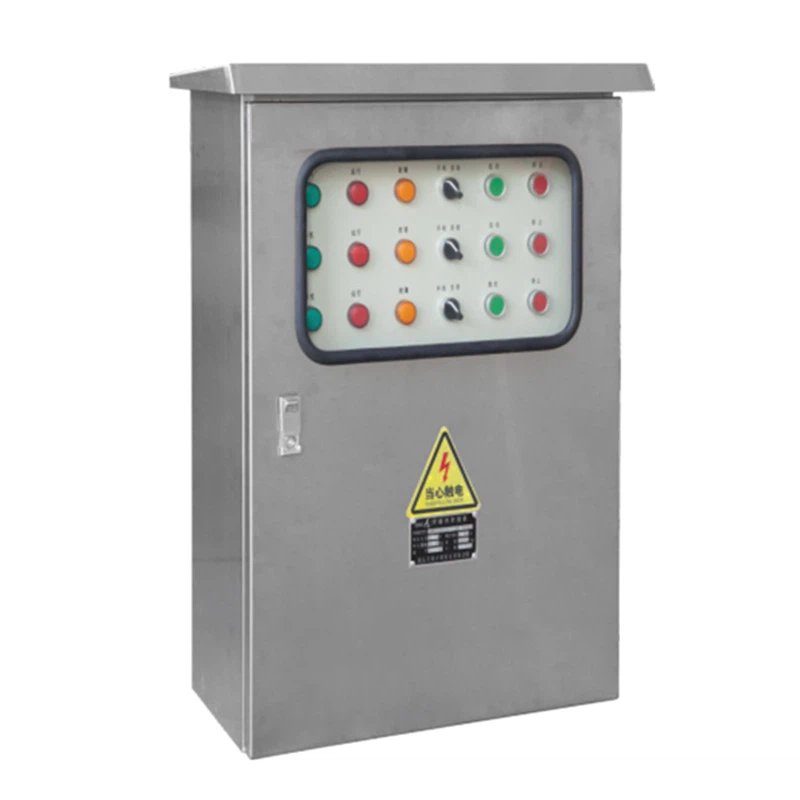
The electrical control cabinet has significant advantages in centralized management and control, and is of great significance to the automation and intelligence of modern industrial production lines.
First of all, the electrical control cabinet achieves centralized management and control of electrical equipment by centrally installing all control equipment in one cabinet. This centralized management method makes operations more convenient, reduces the need for manual intervention, and thus improves production efficiency. At the same time, since all control equipment is located in the same cabinet, unified maintenance and inspection can be easily performed, reducing maintenance costs.
Secondly, the electrical control cabinet has powerful control functions. By using advanced computer control technology and automated control algorithms, electrical control cabinets can achieve precise control of the production process. This kind of control is not limited to the control of a single device, but can also achieve coordinated control between multiple devices, thereby improving the operating efficiency of the entire production system.
In addition, the electrical control cabinet also has a high degree of integration. It integrates a variety of electrical components and computer equipment and can achieve a variety of functions, such as data collection, analysis, processing, storage and transmission. The integrated design of these functions makes the electrical control cabinet more flexible and scalable, and can be customized and upgraded according to different production needs.
Finally, the electrical control cabinet also has a high degree of safety and reliability in terms of centralized management and control. It uses a variety of protection measures and backup mechanisms to ensure timely response and recovery in the event of equipment failure. At the same time, the electrical control cabinet also has automatic detection and alarm functions, which can promptly detect potential safety hazards and deal with them.
Where are Electric Control Cabinet cabinets used
industrial automation
In factories and production plants, where it is necessary to control production machines and equipment, assembly lines, industrial robots and many other devices.
energy distribution
The energy industry uses control cabinets and applies them, for example, in power stations, transformer substations, generators, energy installations and energy management systems - wherever control and monitoring of the energy network is needed. They are also used in equipment that uses renewable energy sources, such as wind turbines;
building automation
Control cabinets perform important functions in the management of lighting and ventilation systems, as well as in the monitoring of security and access control systems in residential or office buildings;
railway traction and trains
Control cabinets are used, for example, for controlling traction systems, controlling brake systems or managing emergency power supply systems.
It makes it easier to understand and monitor the working of the electric system within specific premises, making it an assistive factor for operators to control working and achieve objectives in automation industries.
They can get made according to your specific industry requirement as there are no design limits, which makes them flexible to fit in according to the need of your industry.
The Electric Control Cabinet makes the electric system more reliable by giving real-time data of every change happening within the power system and authority to make changes to turn them into suitable conditions for equipment.
The complex industrial system gets managed from a single Electric Control Cabinet, which makes it very easier and more affordable to control the system’s functionality.
These Electric Control Cabinet are available in both indoor and outdoor mode, which makes them weather resistant in outdoor mode and allows the operators in the field to give necessary or emergency inputs.
These are hazard-proof and fireproof with complete protective gears to save the system in case of any emergency, which makes it safe to operate for operators.
It decreases the overall running cost of any industry by simply providing management, control, and inspection from one panel that requires fewer technicians and skillful engineers to operate the whole industry.
As Electric Control Cabinet the whole process within industries by simply monitoring the electric control panel indicators, that decreases the chances of any upset happening within the process system.
It becomes easier to track and troubleshoot issues within the whole system by simply checking the working of all equipment and lines at the Electric Control Cabinet.

Safety First
Safety always should be the first concern before opening a cabinet. As a technician or engineer begins work on electronic controls, it’s natural to maintain a narrow focus on the suspect low-voltage equipment and controls and easily forget that working inside a mixed-voltage cabinet exposes workers to dangerous voltages and short-circuit currents. Know the voltages you’ll see before opening that door.
Electromagnetic interference
Notice how wiring enters the cabinet. The 480-volt power conductors and low-voltage control wiring generally will be brought in through separate conduits.
Running such conductors in separate conduits in the field helps to minimize the possibility of electromagnetic interference (EMI). If power conductors are too close to the control wiring and electronic components, you can expect erratic equipment operation.
Separation of power and control circuitry
Ensure adequate separation of power and control circuitry. To help differentiate between them, notice the conductor sizes and color-coding schemes in use. Control circuit wiring typically is 16 AWG or 18 AWG. Power conductors generally will be no smaller than 12 AWG and often are considerably larger. Grounded conductors are white, are gray, or have three continuous white stripes on any color insulation except green, blue, or orange. Control circuit wires that are white with a blue stripe are the grounded conductor for a dc control circuit. Any control wire that is orange or white with an orange stripe is an ungrounded conductor that remains energized after the main supply disconnect is switched to off. Additionally, red insulation indicates an ungrounded conductor in an ac control circuit and blue insulation indicates the ungrounded conductor in dc control circuits. Conductors that enter the cabinet as part of a multi-conductor cable can have different color schemes.
Low voltage instrumentation wiring
Usually, either a twisted pair of conductors or a shielded cable helps minimize the effects of EMI in low-voltage instrumentation wiring. In a twisted pair, one conductor twists around another with the number of twists per inch specified. A shielded cable is a twisted-pair cable with a braid or foil covering running the entire length of the conductors. It also has a thermoplastic jacket for physical protection.
Voltage measurements
Once you correct any abnormalities found during the visual inspection, take voltage measurements to ensure there’s no EMI from power conductors. Use a properly rated digital multimeter to measure and record voltage levels. Input voltage to electronic equipment such as PLCs and VFDs is generally specified as plus or minus 10% of the rated voltage.
Control wiring terminations
Check control wiring terminations for tightness. Any effects of electromagnetic induction the controls might normally have been able to handle will be exacerbated at a loose termination point, and electronic inputs are affected. Occasionally, wires come loose from pressure connectors, usually because of improper installation. Check each individual wire at its termination point to ensure it’s secure in its connector or under its terminal screw.
Certifications


Has a mature technology team, business team and operation team, for foreign clients to provide optimal solutions of complete sets of mechanical & electrical products and services (All kinds of pump, motor, control system, compressor, oil field equipment, well head, pipes, casing & accessories, tubing, fishing tools, etc.)
FAQ
As one of the leading electric control cabinet suppliers in China, we warmly welcome you to buy bulk high-grade electric control cabinet made in China here from our factory. All customized products are with high quality and competitive price.
