

Working principle
Motor drive: When the motor is powered on, the drive shaft starts to rotate.
Magnetic coupling transmission: The motor shaft drives the outer magnetic rotor to rotate. The outer magnetic rotor and the inner magnetic rotor interact through magnetic force to form magnetic coupling. Due to the action of magnetic force, the inner magnetic rotor also starts to rotate synchronously.
Impeller rotation: The inner magnetic rotor is connected to the impeller of the pump. As the inner magnetic rotor rotates, the impeller also starts to rotate.
Liquid delivery: The rotation of the impeller generates centrifugal force, so that the liquid in the pump chamber is sucked from the liquid inlet. Through the action of centrifugal force, the liquid is pushed to the outlet of the pump body to complete the liquid delivery process.
Leak-free design: The existence of the isolation sleeve completely isolates the liquid in the pump chamber from the outside world, ensuring no liquid leakage, which is particularly suitable for conveying dangerous or corrosive liquids.
Specific principle of magnetic coupling
Magnetic transmission: The outer magnetic rotor and the inner magnetic rotor are equipped with relative magnetic poles, which attract and repel each other through the magnetic field, so that the torque transmission between the two rotors is contactless. This contactless transmission method avoids the wear and leakage problems of mechanical seals in traditional pumps.
Magnetic field effect: When the motor drives the outer magnetic rotor to rotate, the magnetic field change of the outer magnetic rotor drives the synchronous rotation of the inner magnetic rotor, thereby driving the impeller.
Typical Applications
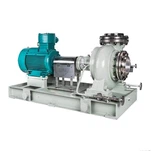
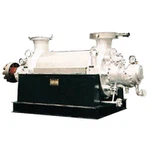
Magnetic pumps are widely used in industries such as chemical, pharmaceutical, food processing, electronic manufacturing and environmental protection, especially in situations where high sealing and safety are required, such as conveying acids, alkalis, solvents, flammable liquids, etc.







 Whatsapp:
  Wechat: +8613953308355