

1. Negative pressure pump
Before starting the pump, the suction pipe and the pump must be filled with liquid. After the pump is turned on, the impeller rotates at high speed, and the liquid in it rotates together with the blades. Under the action of centrifugal force, it flies away from the impeller and shoots out. The speed of the injected liquid gradually slows down in the diffusion chamber of the pump casing, and the pressure gradually increases. Outlet, the discharge pipe flows out. At this time, a vacuum low-pressure area without air and liquid is formed at the center of the blade due to the liquid being thrown to the surroundings. The liquid in the liquid pool flows into the pump through the suction pipe under the action of the atmospheric pressure on the pool surface, and the liquid continues like this. It is continuously sucked up from the liquid pool and continuously flows out from the discharge pipe.
2. Positive pressure pump
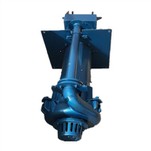
It mainly refers to the working principle of the submerged pump. Take the submersible pump and the long-axis submerged pump of the gas station as examples. The submersible pump is to immerse the motor and the pump into the bottom of the tank together. The pump separates the pump and the motor and connects them with a long shaft. Its working principle is to convey the medium under positive pressure, so it solves the problem of air resistance and cavitation of the impeller when the medium is conveyed under negative pressure. The motor of the submersible pump is not above the liquid surface, but below the liquid surface. The motor is a submersible motor, and it is connected with the pump wheel to be hidden in the liquid. The main advantages of this design are: the bearing of the pump is only a few hundred millimeters, there is no long shaft, there will be no swing problem, the operation is stable, the sound is very small, and there is almost no vibration. wear and tear.
Working principle of chemical pump
Apr 19, 2023



Send Inquiry
Categories
Contact Us
- Tel: +8613953308355
 Whatsapp: +8613953308355
 Wechat: +8613953308355
- Email: boshanpumpzp@163.com
- Add: Room 817, Building 5, No.111 Liuquan Road, High-Tech Zone, Zibo, Shandong, China