

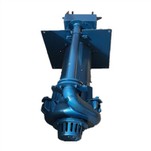
The motor of a submersible pump is located at the bottom or top of the pump and is powered by a cable. When the motor starts, electrical energy is converted into mechanical energy to drive the impeller to rotate. The impeller draws water from the pump inlet during high-speed rotation and throws the water to the periphery of the impeller through the centrifugal force generated by the rotation. This process causes the water to flow from the center of the impeller to the outer edge, forming a high-speed water flow.
When the water is thrown out by centrifugal force, it enters the diffuser or diversion device in the pump casing. The function of the diffuser is to slow down the high-speed water flow, convert kinetic energy into pressure energy, and increase the pressure of the water.
The pressurized water is discharged from the outlet pipe of the pump body and enters the water delivery pipe. In this process, the head (height) and flow rate of the water are determined by the design of the pump, the shape of the impeller and the speed.
Submersible pumps are generally equipped with a check valve at the outlet to prevent water from flowing back into the pump when the pump stops working, avoiding damage or backflow.
The motor and pump body of the submersible pump are both in water, and the water itself can be used as a cooling medium to keep the motor temperature stable during operation. At the same time, the submersible pump has a special sealing structure to ensure that water cannot enter the motor to prevent short circuit or damage.
Some submersible pumps are equipped with a float switch. When the water level reaches a certain height, the float rises and starts the pump. When the water level drops to a certain point, the float drops and stops the pump, realizing automatic control.
What Is The Working Principle Of A Submersible Pump?
Sep 11, 2024
Send Inquiry
Latest News




Contact Us
- Tel: +8613953308355
 Whatsapp: +8613953308355
 Wechat: +8613953308355
- Email: boshanpumpzp@163.com
- Add: Room 817, Building 5, No.111 Liuquan Road, High-Tech Zone, Zibo, Shandong, China